

Konovo Client Portal (Research)
ESTABLISHING A SHARED UNDERSTANDING THROUGH Research
Role: Director of Product Design
Research Timeline: March 2026 – May 2026
Designed With: Fanny Ordanini (Senior Product Designer)
Teams: Product, Engineering, Product Management, Research Operations
Responsibilities: Workshop Facilitation, User Research Synthesis, Journey Mapping, User Flow Design, Service Design, Information Architecture, Cross-Functional Alignment, Strategic Planning
Impact: Established a shared understanding of complex client workflows across Market Research Agency and Life Sciences business units, aligning Product, Design, and Engineering around a unified customer journey and creating the strategic foundation for a future client research portal.
Overview
As Konovo began defining a long-term vision for a unified Client Research Portal, one of the biggest challenges wasn't interface design, it was building a shared understanding of how clients actually interacted with the business. Different teams had developed workflows around separate products, service models, and customer types over many years, resulting in fragmented processes and inconsistent mental models across Product, Design, and Engineering.
As Director of Product Design, I partnered closely with Product Management for a series of collaborative discovery workshops focused on mapping the complete client experience across two distinct customer types: Market Research Agencies (MRA) and Life Sciences (LS) businesses. Through facilitated brainstorming sessions, journey mapping exercises, and detailed workflow modeling, we established a common language for the platform and created the strategic foundation for future product planning. Rather than designing individual features, this work focused on understanding the business at a systems level: aligning stakeholders around how clients move through the research lifecycle.
The Problem
The organization had no single view of the customer journey. Similar client goals were accomplished through different workflows depending on business unit, service model, or internal team, making it difficult to define a cohesive platform strategy. Product discussions frequently centered on individual features rather than the end-to-end experience, while Engineering lacked a clear picture of how seemingly independent capabilities fit together into complete user workflows.
Before meaningful product design could begin, the team needed to answer more fundamental questions: Which client workflows were truly shared? Where did experiences intentionally diverge? Which areas of the value chain belonged inside the platform versus remaining operational processes? These were all crucial questions to inform the information architecture, roadmap prioritization, and future design work.
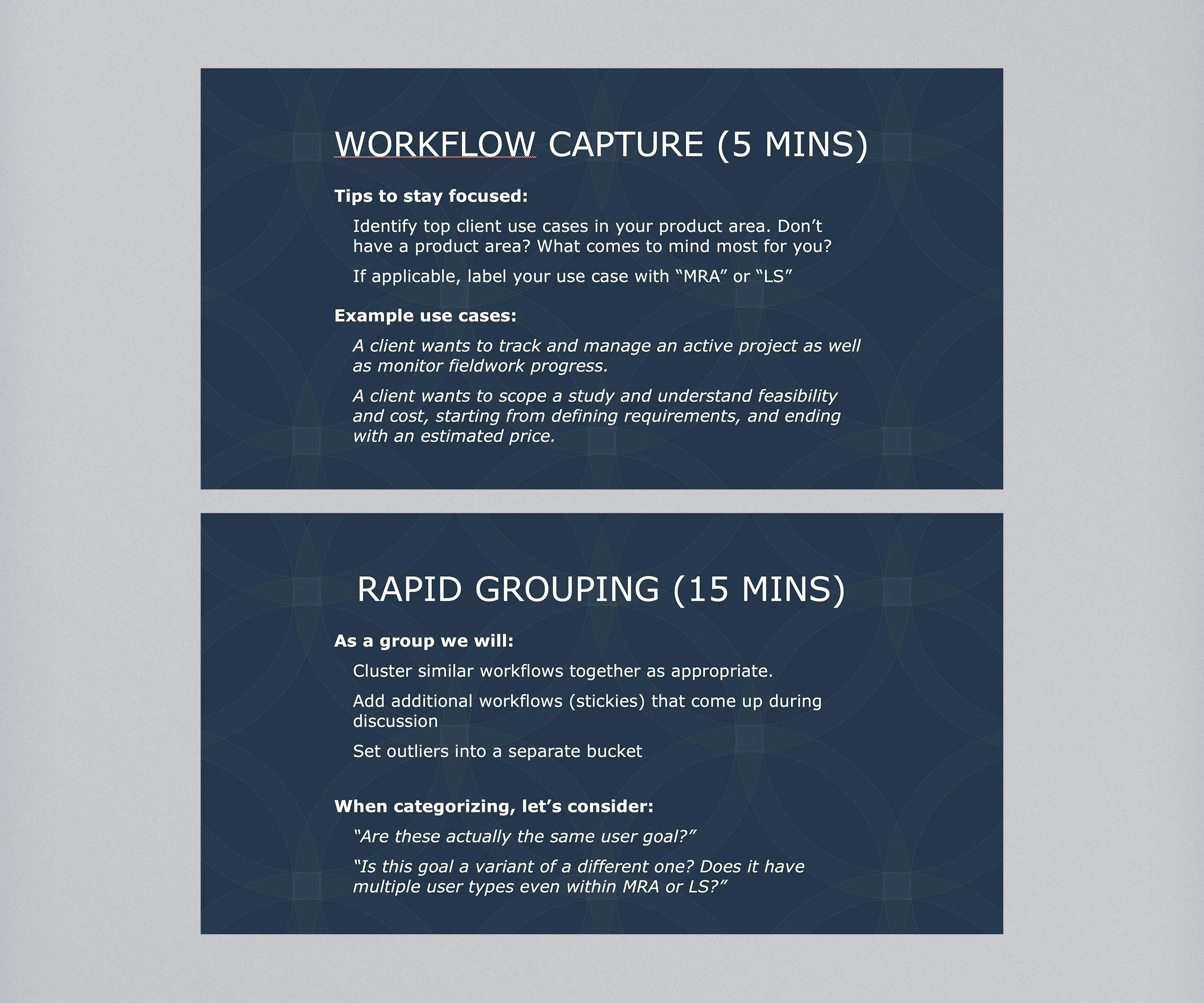
The workshop was planned and organized ahead of time, shown is the first two steps of the presentation deck.
“Which client workflows were truly shared? Where did experiences intentionally diverge?”
Research Process
The project unfolded across several collaborative phases, beginning with an in-person cross-functional workshop involving Product, Design, and business leadership. I facilitated a structured brainstorming exercise that encouraged stakeholders to capture client-facing workflows across every area of the business. We synthesized dozens of individual use cases into a smaller set of shared workflow categories, creating an initial taxonomy that highlighted where MRA and Life Sciences experiences overlapped, differed, or could ultimately converge.
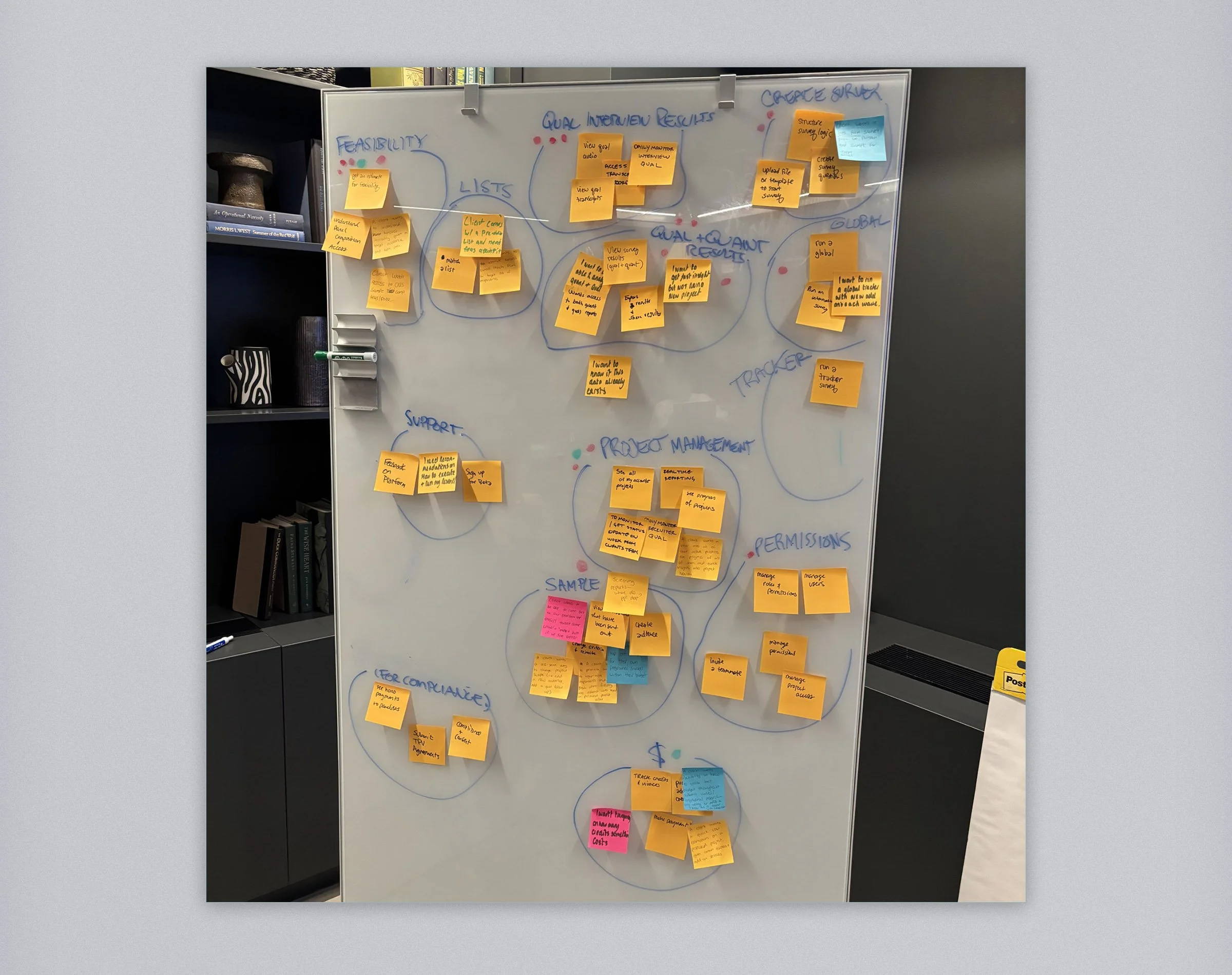
Use cases were grouped as a part of the in-person workshop.
With these workflows established, I worked alongside another designer and multiple product managers to map the end-to-end customer journey. Each participant independently explored how users progressed through the research lifecycle before reconvening to compare perspectives and challenge assumptions. I then synthesized the team's work into four unified journey maps representing the organization's primary user groups: internal and external users across both MRA and Life Sciences workflows. These journeys became a shared reference point for future planning, allowing stakeholders to reason about the platform from the customer's perspective rather than from organizational silos.
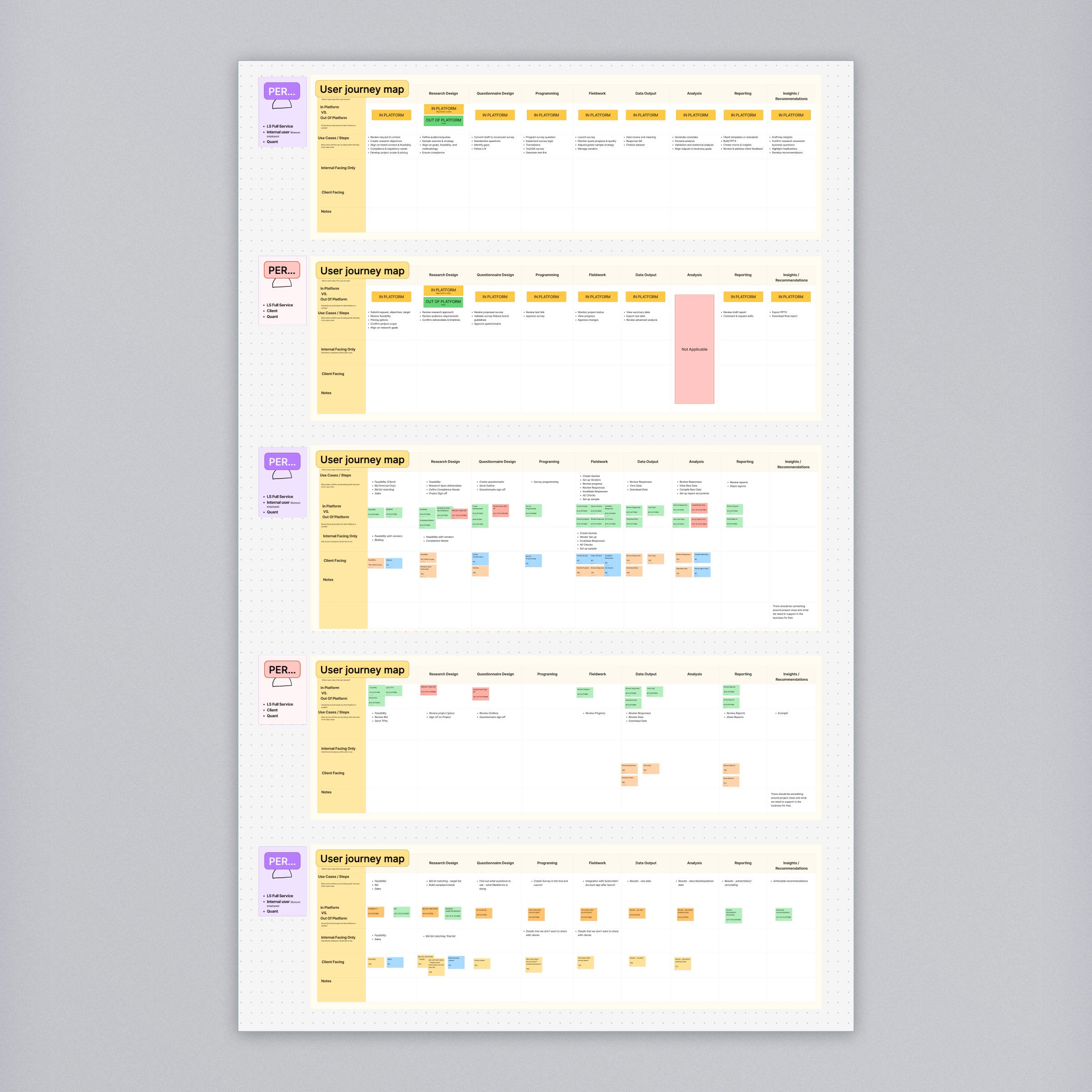
Designers and Project Managers worked to draft journeys for different business segments, clients, and internal users.
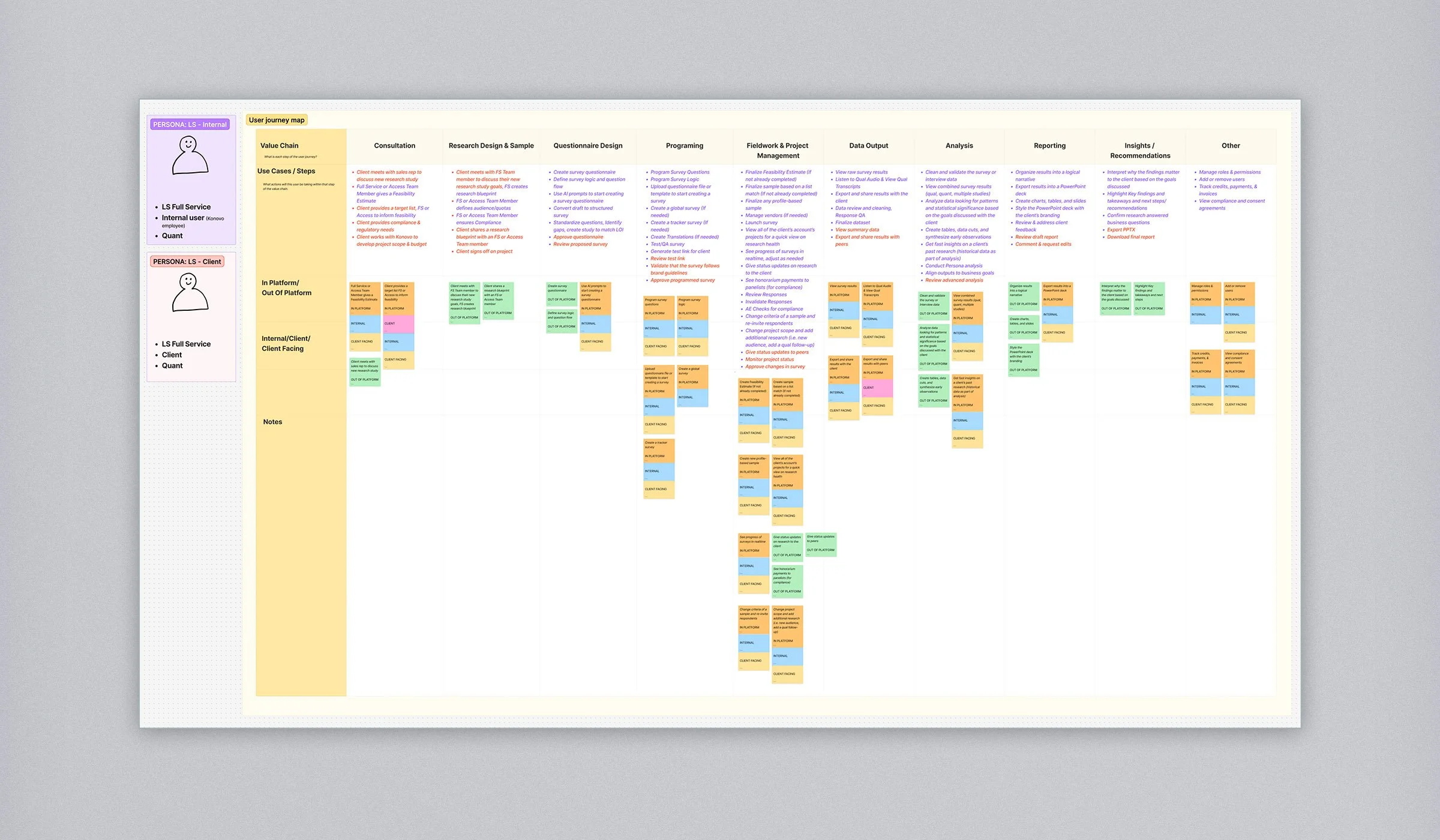
Designers and Project Managers later came together and compiled detailed journey maps.
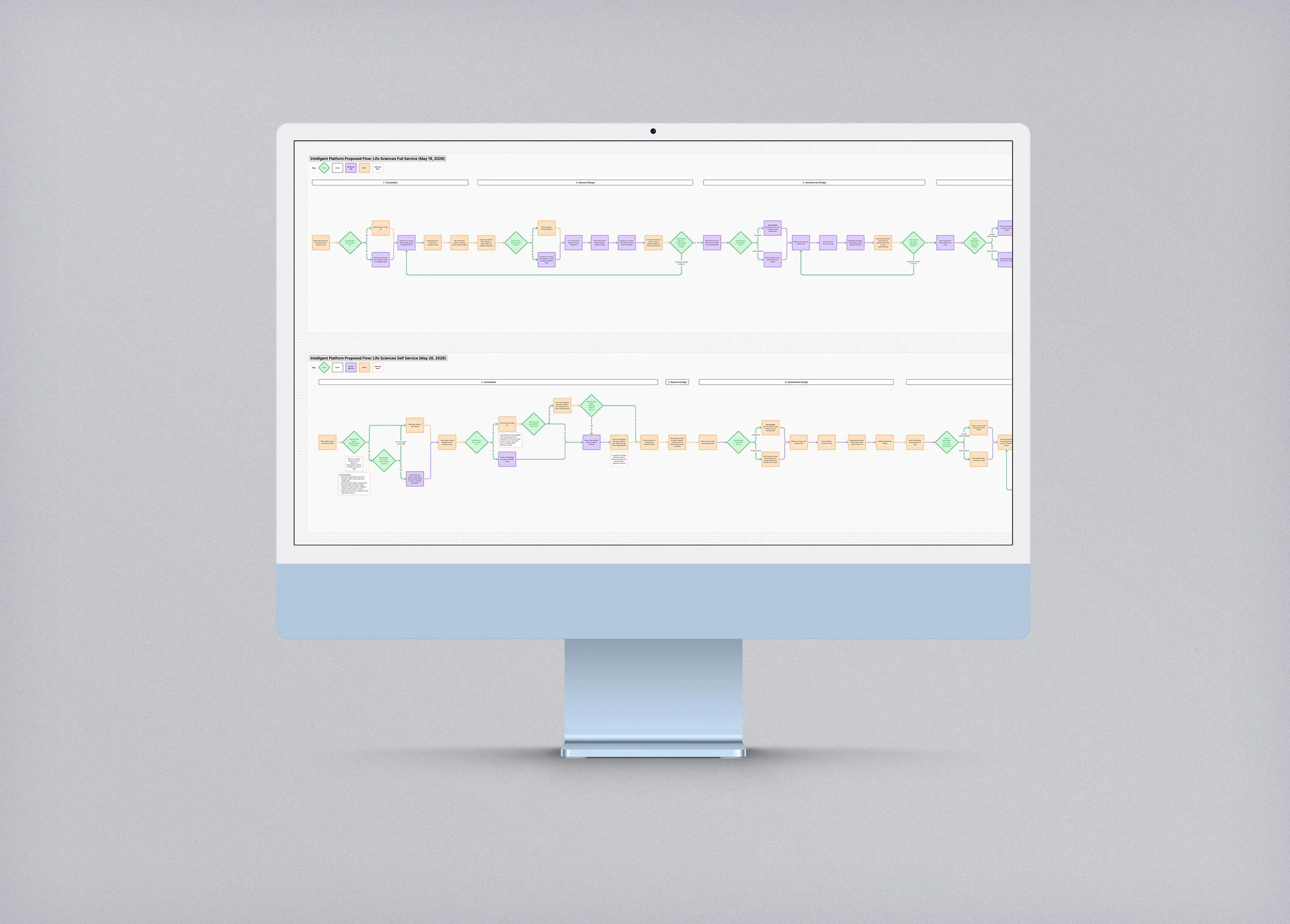
The final stage translated those high-level journeys into detailed operational user flows that Product and Engineering could use during planning. The resulting documentation balanced strategic thinking with implementation detail, connecting high-level customer journeys to the functional requirements needed to support future development.
Impact
This initiative established a shared mental model for one of the organization's most complex product initiatives. By aligning Product, Design, and Engineering around common customer workflows instead of isolated feature requests, the team gained a clear framework for discussing platform strategy, information architecture, and future roadmap decisions.
“By aligning Product, Design, and Engineering around common customer workflows instead of isolated feature requests, the team gained a clear framework for discussing platform strategy, information architecture, and roadmap decisions.”
Complex organizational knowledge that had previously existed across individual departments was consolidated into a coherent representation of the customer experience, giving stakeholders a common language for evaluating priorities and identifying opportunities for standardization. The work became a foundational artifact for future planning and demonstrated the value of design as a strategic facilitator, not simply a producer of interfaces, but a driver of organizational alignment and systems thinking.
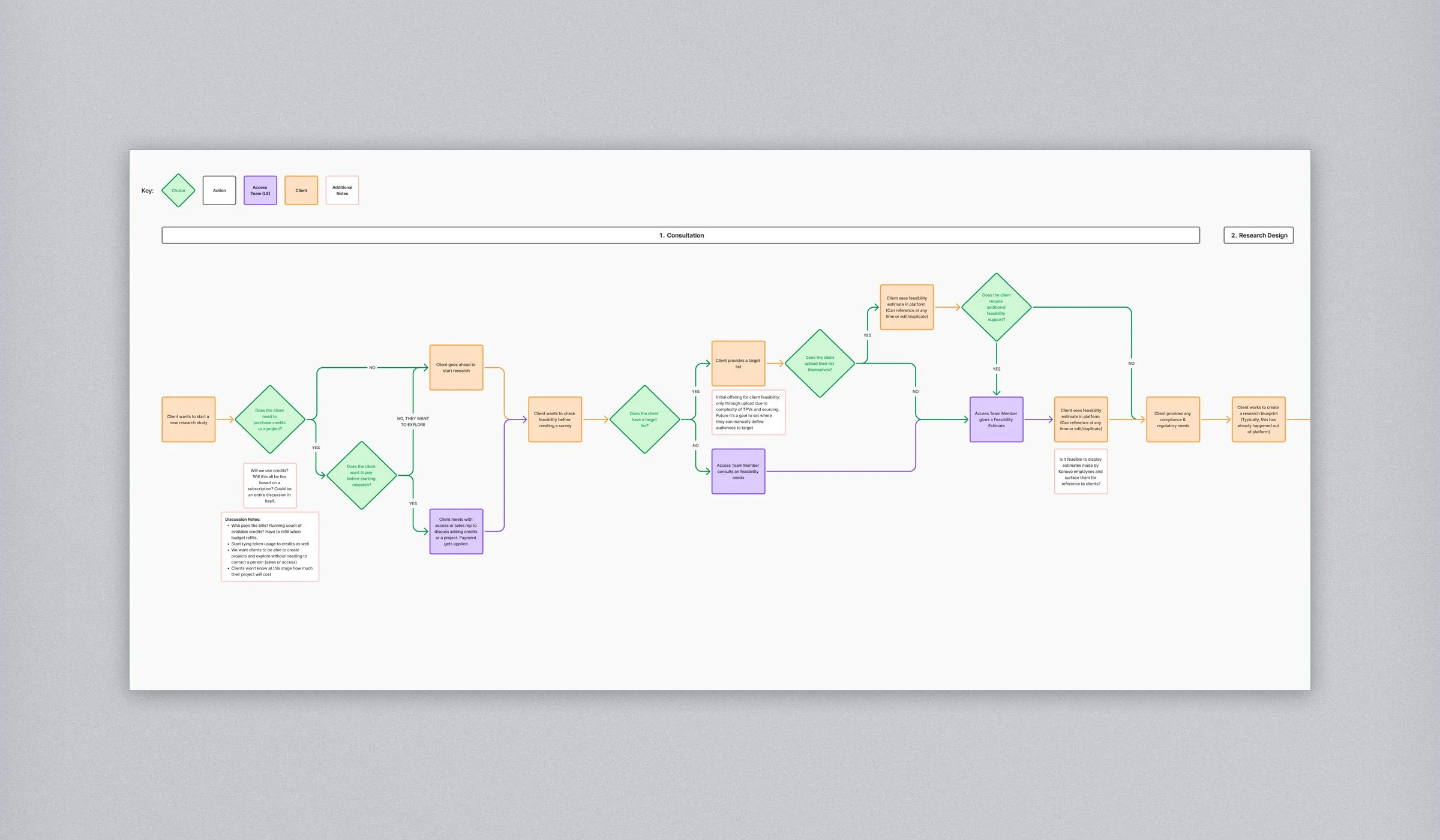
First few sections of the value chain in the Life Sciences flow.
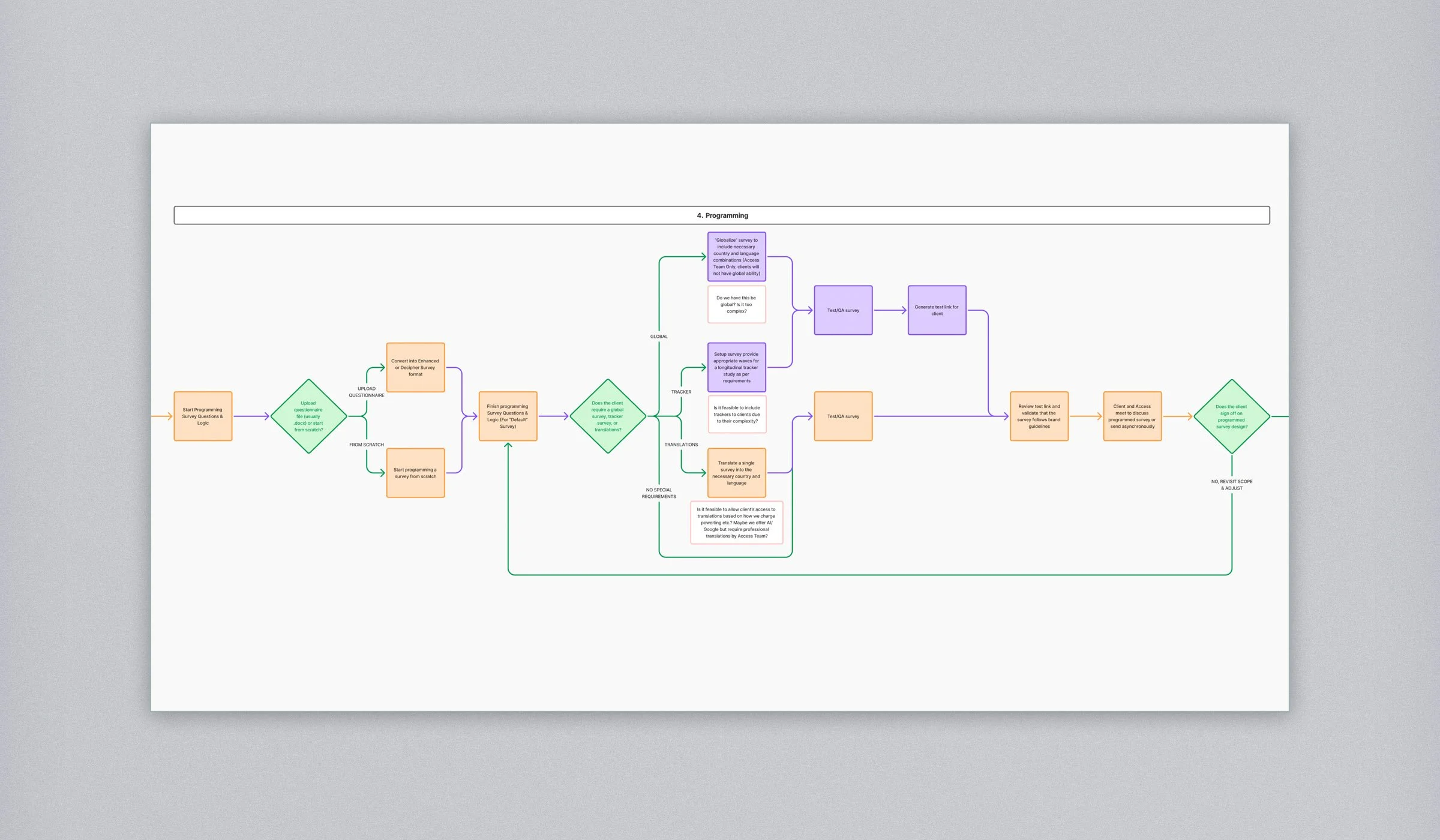
Programming section detail of the value chain in the Life Sciences flow.
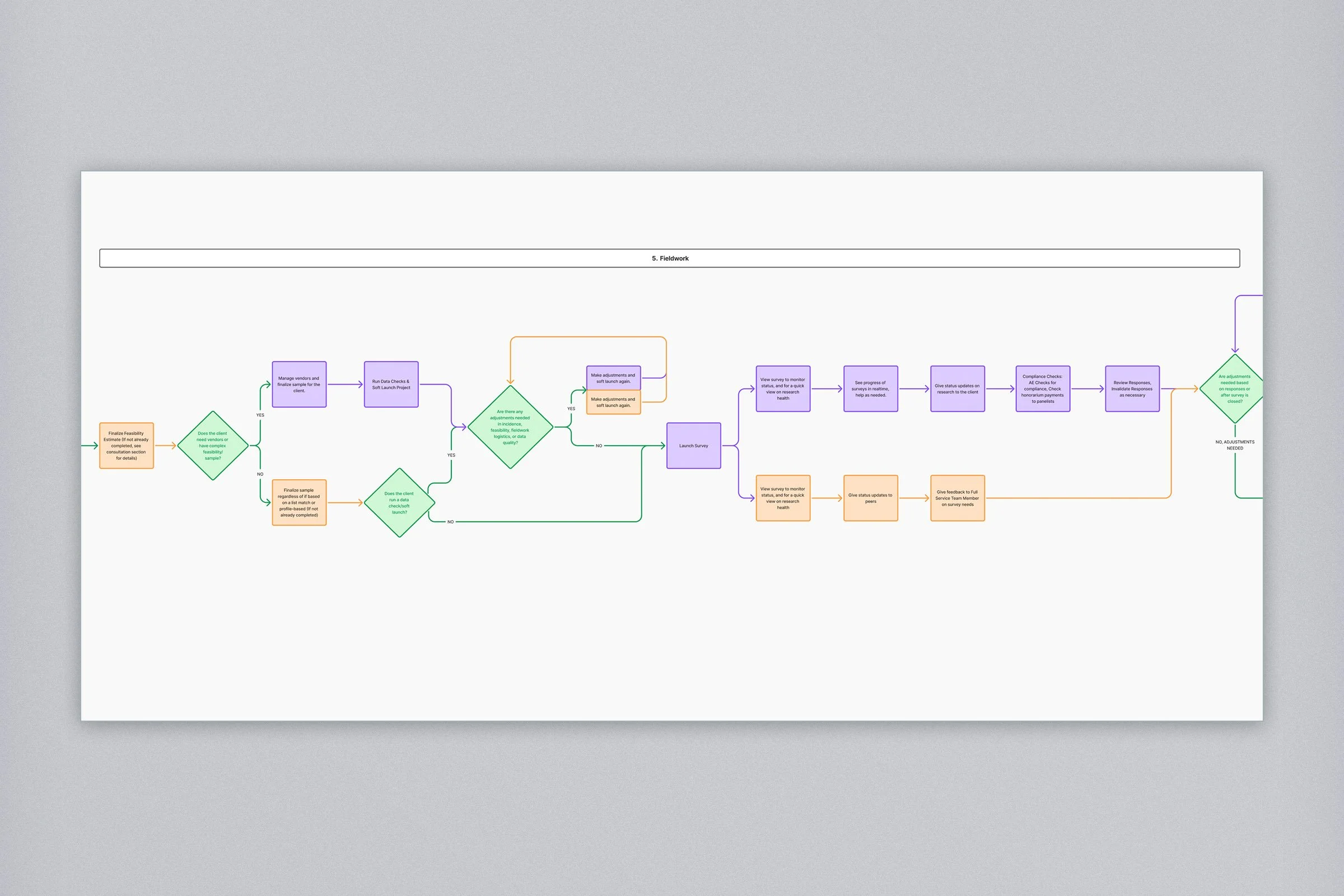
Fieldwork section detail of the value chain in the Life Sciences flow.